The gift of presence
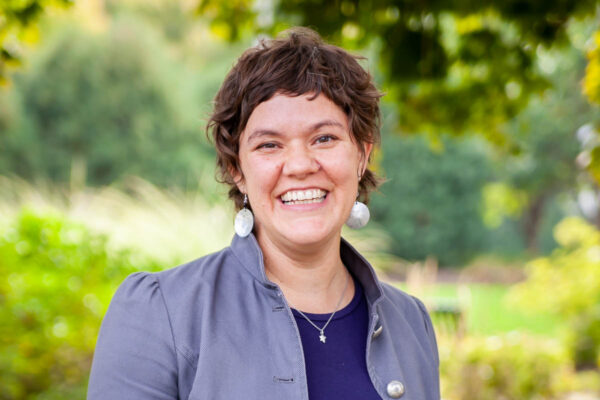
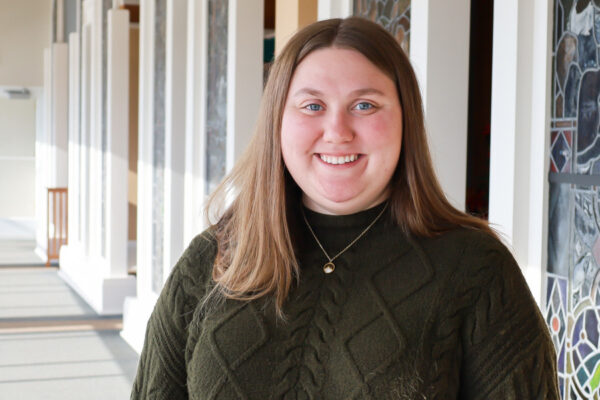
In this season of Lent, as we’re called to slow down, to change our pace and reconnect with what matters most, two St. Paul people have found something profound: the ministry of presence. Jan Muhs walks hospital corridors offering prayer cards and listening ears. Martha Bakeris brings communion into living rooms where homebound members long for connection. They aren’t experts or counselors. They’re simply people willing to show up, to sit with others in their moments of vulnerability, and to carry the church’s love beyond the building’s walls.
Honoring Nancy 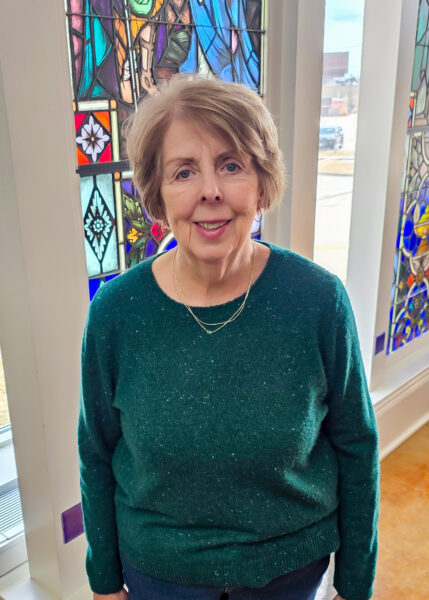
Jan Muhs knows what it’s like to sit in hospital rooms. For years, she accompanied her sister-in-law Nancy through the long journey of cancer treatment–from the initial diagnosis when Nancy was in her late fifties through chemotherapy sessions, hospital visits, and finally to the end.
“I took her a few times when she had the infusion,” Jan remembers. “Just sitting there in the room, we’d chat or she’d doze off.”
Those quiet hours taught Jan something important.
“Just seeing people sitting there in the hospital, so many people are sitting there alone.”
When Nancy died on what was her wedding anniversary, having lived long enough to see her sons graduate high school, get married, and meet four grandchildren, Jan carried that observation with her. She noticed an announcement in Connections seeking hospital befrienders.
“It’s a way to honor Nancy,” she said simply.
Now, twice a month—sometimes more if there’s a need—Jan walks into hospital rooms carrying prayer cards and an openness to whatever the moment requires. Her introduction is straightforward: ‘Hi, I’m Jan. I’m from St. Paul Lutheran Church. I’ve got these prayer cards for you. Everyone at St. Paul is thinking of you, caring for you, praying for you. Have a good recovery.’ And then she reads the room.
“You let the patient take the lead,” she explains. “Sometimes you have ones who are talkative. Other times there are people who want no part of it. You can just tell by the vibe in the room.”
She might stay for five minutes or forty-five, depending on what the person needs. One woman, whose husband had recently died, talked with Jan for nearly an hour. “This has been so enjoyable,” the woman told her. “You youngsters are just so good to talk to.”
The work has taught Jan about the power of being fully present.
“It’s the connection. I’d rather talk to someone in person for that human connection. We need to learn how to talk to people. We can show empathy to them,” Jan said. “It makes me feel good. You come away with the thought that maybe you made their day.”
She’s learned that often the most helpful thing she can do is simply listen, creating space for someone to say what’s on their heart. Sometimes Jan visits people she already knows from church, seeing familiar faces in unfamiliar circumstances.
“You see people at church, and you may not know their first name,” she said. “And then you get to sit and have a conversation. You really get to know them so much better.”
The hospital befriender ministry has deepened her connections within the congregation while honoring the sister-in-law who taught her so much.
“When you’re in the hospital, it can be a scary time no matter what,” Jan said, “and you can give someone a feeling of happiness for a little bit.” Or as she puts it another way: “A ray of hope.”
Church in the living room 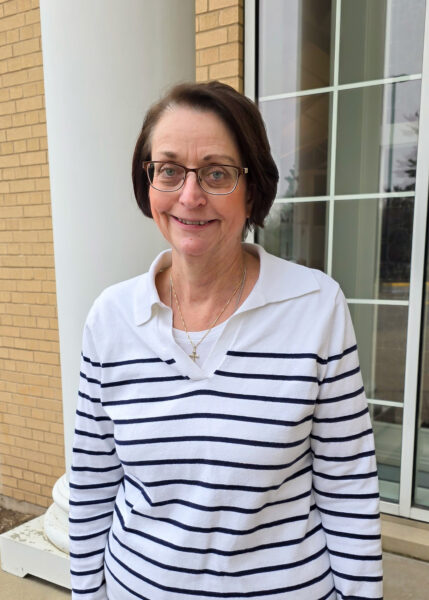
For Martha Bakeris, bringing communion to homebound members means showing up at someone’s front door four times a year with a small kit and a familiar liturgy. But what happens in those living rooms is anything but routine.
“It’s more intimate,” Martha explains, comparing home communion to receiving it in the sanctuary. “There’s a connection. One-on-one through the whole miniature service. Looking someone in the eye when you’re doing the reading. It’s more personal.”
What she appreciates most is the opportunity to develop ongoing relationships.
“I’m going to someone’s home and it’s usually the same people each time, so you develop a connection and you become friendly,” she said. “Home communion creates space for relationships to deepen over time.”
A typical visit begins with connection. Martha arrives, greets the person, and spends time catching up before beginning the liturgy.
“You’re in their home environment, so it’s easy to generate a conversation with that person,” she notes. “They might talk about family photos on the wall, a favorite chair, or what’s been happening in their lives.”
Then Martha sets up wherever works best—a coffee table, bedside stand, a kitchen counter—and leads them through the familiar words of the communion liturgy.
The gratitude she encounters is palpable. Right now, Martha visits one couple regularly, and their daughter waits at the door, opening it before Martha can knock.
“When I left, the daughter said, ‘When will you be back?’ For homebound members who can’t physically attend Sunday services, these quarterly visits are so important,” Martha said. “It’s often the highlight of their week.” What makes the ministry meaningful is how it tangibly connects isolated members to the broader church community. Martha brings along the latest Connections and or copy of the Journey magazine, and recipients get excited about staying connected to congregational life.
Even the liturgy itself reinforces belonging.
“The way the service is written in the packet reminds everyone they are part of the St. Paul community. You’re in our hearts,” Martha said. “Church isn’t just Sunday mornings in the building. Church is people, and, in this case, church comes to you.”
For Martha, the experience has also transformed her own relationship with communion.
“When I’m doing it, I feel very blessed and very reverent,” she said. “I want to be careful to do it well and do it right because it’s important to them and it’s important to all of us.”
In a culture that moves quickly and often leaves behind those who can’t keep pace, Martha’s quarterly visits send a different message.
“You’ve got a relationship,” she said. “We’re not as digitalized. They’re homebound. They don’t get to see that many people. It’s very rewarding for both of us to be face-to-face.”
Slowing down, showing up
As we move through this Lenten season, Jan and Martha offer a powerful reminder: sometimes the most sacred thing we can do is slow down enough to be present with another person. No expertise required. No perfect words needed. Just a willingness to show up, to listen, to carry the church’s love to people who need to know they haven’t been forgotten.
“I hope someone would do it for me,” Jan said.
It’s a simple statement that captures the heart of these caring communities: treating others the way we hope to be treated, walking alongside each other through both valleys and mountaintops, being the church for one another.
Be part of a Caring Community
Hospital Befrienders and Care Companions walk alongside church members through difficult seasons, offering friendship, presence, and prayer. No counseling experience required–just a willingness to listen and care.
Home Communion volunteers visit homebound members in care facilities and private homes four times per year, bringing the sacrament and the warmth of congregational connection.
Contact Sara Olson-Smith, sara@stpaulqc.org, to learn more. You can start anytime throughout the year.