Breaking the silence
Psst. Can I share something in confidence with you? Off the record? Just between you and me… Privately… Not for publication?
All right, here it is. I think confidentiality is overrated. Sometimes dangerous even.
Have you ever wondered why we are so concerned about having privacy in our lives? What is it about our world that seems so unsafe? What might cause us to think that if others knew something about us, we would be compromised? Or in trouble? Why do we feel safer being lesser known or understood?
Admittedly, there are real dangers in the world. People might take our money if they knew our Personal Identification Number (PIN). Insurance companies might not insure us if they knew we had cancer. Employers might not hire us if they knew we were being treated for schizophrenia.
Feeling safe is a basic human instinct, but sometimes the threats we fear may not be real or truly harmful. It might help to ask ourselves: ‘So what if people know I have anxiety?’ ‘What’s the big deal if others know my thoughts dont’ always make sense?’ ‘Why is it a problem if someone is aware that I struggle with addiction?’ ‘Where is the shame in having relationship difficulties?’ ‘What’s the harm if others know that sometimes I don’t like myself?’
Are we really in danger when people come to know us more completely?
The discomfort we feel may stem from the fact that others might think less of us and feeling “less” in our highly competitive culture can wreak havoc on our self-esteem. Anxiety, faulty thinking, substance use, relationship instability, and self-esteem weakness are all mental health manifestations that most people experience throughout their lives.
These conditions can be hard to understand because they are experienced and revealed differently in each of us. They can create anxiety and discomfort in others when they show themselves in odd and unpredictable ways. Thus, confidentiality becomes the response to this discomfort. In not talking about mental illness, however, we perpetuate the stigma.
This cycle of stigma is harmful because it unfairly characterizes mental illness, compromises relationships, and places limitations on growth and fulfillment. It becomes doubly harmful when those who are the object of mental health stigma internalize these distorted beliefs and spiral down into an identity of shame. The damage caused by mental health stigma in the world (and within ourselves) is an urgent concern — an existential issue. What can be done?
Amazingly, we as people of St. Paul are already at work in promoting mental health and dismantling stigma. Faith communities like this one have significant mental health benefits. Professor Tyler VanderWeel of Harvard University has authored many studies explaining how involvement in a religious community has beneficial effects on depression, suicide, divorce, and even mortality. So, when someone asks us what we do to stay healthy, we cite our medical care, our exercise, our nutrition and confidently assert “I’m engaged in a wonderful faith community!” St. Paul core values all have intrinsic psychological benefits. I like to think of it as St. Paul Therapy.
Everywhere we turn, within and beyond our community, there are lingering signs of mental illness reproach. There are those who remain hesitant to share their emotional vulnerabilities for fear of disapproval. There are those who become anxious when they hear emotional distress. There are some who say “I’m fine” when they’re not. There are many who avoid persons whose behaviors or appearances seem unusual. There are many who pass by the 2025 Main St. or 2205 Carey Ave. houses but hesitate to stop and say hello because of confidentiality. There are public policies which infer that persons with invisible mental conditions need to just work harder. There are persons who feel so alienated and defective that they contemplate or complete suicide.
Part of St. Paul’s commitment to mental health involves our intentional commitment to programming and community involvement. This month is no exception. We can look ahead to October with feelings of hope and gratitude for all of the meaningful events and activities in this community that sustain our awareness and improve our understanding. Moving forward, new seasonal themes compete for our attention, yet mental health stigma will remain an insidious problem.
Let us not relapse into the false comfort of privacy. By opening ourselves to others and showing that we are curious, concerned, and comfortable hearing their stories perhaps we can fight the irrational shame associated with mental illness. By challenging our personal comfort within our zone of confidentiality, we open ourselves to deeper understanding.
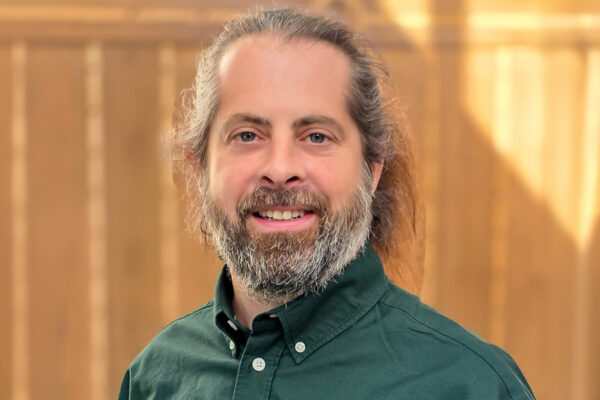
— written by Steve Kalber, St. Paul counselor
Steve serves as St. Paul’s counselor, working with St. Paul and neighborhood families. He is available to supplement the counseling services of St. Paul pastors. His free counseling assists those who may be going through a difficult transition, struggling in relationships, experiencing depression or anxiety, working through some trauma, or in need of a listening ear. Steve is available for appointments, both in-person and through telehealth (via video).
Steve is a graduate of Penn State University with a bachelor’s in English, Victoria College graduate in nursing, and holds a master’s of science in nursing. He worked as a nurse in behavioral health for much of his career, before becoming a professor in the nursing program at St. Ambrose University.
Get connected
NAMI Walks
Saturday, Oct. 10, 9:30 a.m., Veterans Memorial Park 1645 23rd St, Bettendorf, IA
Lace up your sneakers and join the St. Paul crew who walk each year to encourage understanding, reduce stigma, and support programs for people affected by mental illness. Registration is free; everyone gets a T-shirt. Sign up at stpaulqc.org/signups. Contact: Pam Garrett, pam@stpaulqc.org.
Friends and Family of Suicide Loss Support Group
First Monday of the month, 6:30 p.m., Library Conference Room
A space of healing for anyone grieving the loss of a loved one to suicide. This gathering provides a place to find understanding, comfort, and hope alongside others with similar experiences. Simply show up — no sign up required. Contact: Deb and Joe James, joedeb1984@gmail.com.
The Gray Matters Collective
The Gray Matters Collective of the Quad Cities seeks to empower people to become mental health advocates and to save lives. Through education, community engagement, and fostering mental health awareness, the Collective is working to create a world without suicide. Learn more about the organization at thegraymatterscollective.com.
Adult Learning on Oct. 11
Haley DeGreve, Founder and CEO, Gray Matters Collective
When we encounter someone struggling with mental illness, we often don’t know what to do or say. Haley teaches practical skills to recognize mental health needs and respond with confidence. These tools help support others and advocate for our own mental wellbeing. In the Chapel.
Later in the month, Gray Matters Collective returns for a more detailed and experiential evening session. The presentation, facilitated by St. Paul members Joe and Cherie Payne, helps participants to be present with persons experiencing suicidal concerns.
The Gray Matters Collective on Sorta Sacred
Hosts Mark Niethammer and Jessica Taylor explore what it means to show up for someone struggling with mental health. The conversation breaks down myths around mental illness, addresses suicide language, and provides practical tools for being a better ally. First episode premiered Sept. 25. Second episode arrives Oct. 9.