
Day of Honor
Four St. Paul members and Quad Cities Honor Flight guardians and veterans share what it means to spend a day in service to those who served.
Every May, June, and September, a charter flight lifts off from the Quad Cities International Airport in Moline, Ill., carrying about 80 veterans to Washington, D.C., and back — all in a single day. That is the Honor Flight of the Quad Cities (HFQC), now 18 years and 65 flights in.
Since the local chapter launched in 2008, it has transported roughly 6,000 veterans from the region to see the national memorials built in their honor. And in early 2026, the program expanded its eligibility: any veteran who served before December 1990 is now welcome to apply, opening the flights to veterans of Grenada, Panama, Lebanon, and the Cold War era.
Behind each veteran on every flight is a guardian — a volunteer who gives up a full day, and sometimes a piece of their heart, to make sure the experience belongs entirely to someone else.
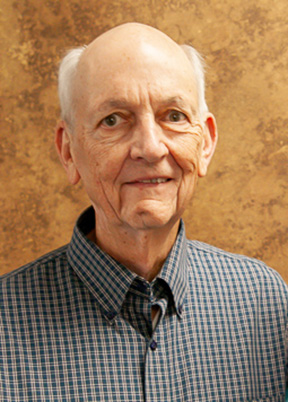 Bob Benson: The First Flight
Bob was there at the very beginning. He was serving on the board of Ridgecrest Village when Bob Morrison, Ridgecrest’s public relations director and the driving force behind bringing the Honor Flight to the Quad Cities, organized the first local flight in 2008.
“Being a veteran, and always being thankful for what other veterans did for my life, I wanted to go. I was paired with two World War II veterans,” Bob recalled. “One of the things that stayed with me was a conversation with one of my veterans. I assumed most WWII veterans returned home in 1945, but he had served into 1946, as part of the forces who entered the concentration camps after the war ended.”
On that first flight, the group was greeted in Washington by Colin Powell, the former secretary of state. It was an emotional day — the World War II Memorial had been opened to the public four years earlier, and many of the veterans had never seen it.
“On the trip home, I was worn out, but the veterans weren’t. They were chatting away. They were so lively,” he said. “It is one of the highlights of my life.”
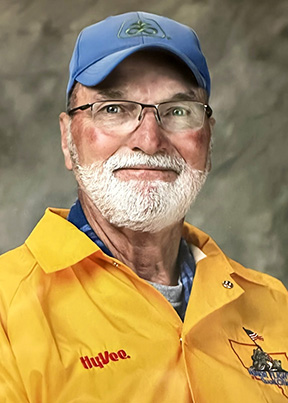 Richard Golinghorst: Both sides of the aisle
Richard has experienced the Honor Flight from both seats. A retired farmer and Army Reserve veteran, he first went as a guardian in 2015. Then, he went again in September 2025 — this time as a veteran.
“It’s a very long day,” he said, noting the 5 a.m. arrival at the airport and the late-night return. But the moments that stayed with him were vivid. The Korean War Memorial had been expanded since his guardian trip. The Air Force Memorial was brand new — its three soaring spires still surrounded by fresh sod.
“The reception of people when we arrived back at the Moline airport, that is what I remember most,” he said. “Thousands of people, including my family and friends were there, lining the airport.”
Richard said the flight deepened his appreciation for the World War II veterans who came before him.
“I can’t say enough for those veterans.”
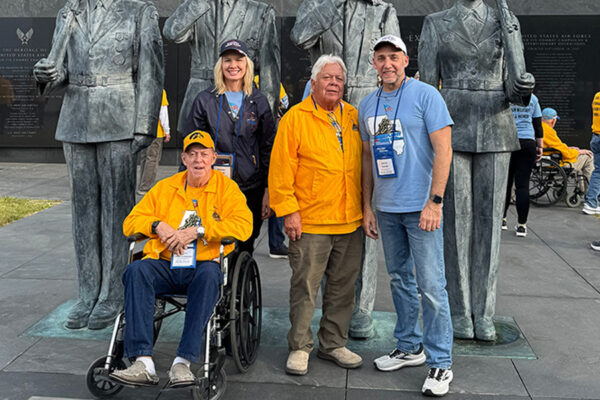 Pam and Darren Garrett: Going back
Pam first heard about the Honor Flight in 2017 from a friend who had gone. At the time, she and her husband Darren had a son serving in the Army, and the call to support veterans felt personal. She went as a guardian the following year. The experience was so profound that Darren signed up. By May 2026, Pam has gone four times and Darren three, and they have committed to going every year.
“It’s so honoring to help a veteran see Washington, D.C., and to see it through their eyes. From that morning to that night, my goal is to do everything I can for them. I’m not thinking about me,” Pam said. “I’ve had mostly Vietnam veterans. Their return wasn’t celebrated and they went on with their lives, so for them to finally get the recognition they deserve for what they’ve done for our country, and to play a small part in that — that’s why I keep going.”
Pam and Darren make a point of getting the phone number of an important family member who couldn’t make the trip, then send photos throughout the day. They pay attention to what the veteran wants to see. They watch for the bathroom, remind them to take their medications, anticipate their needs so vets have the best experience possible.
One of her most memorable pairings was with a Vietnam veteran, whom she met for breakfast two weeks before the flight. He was visibly nervous. He brought a folder of photographs from his time in service — then got on the plane, shaking with nerves.
“When he got back from Vietnam, he said, ‘I went to college and people spit on me,’” Pam recalled. “He had set those experiences aside and never talked about his time there — at all.”
At the Vietnam Memorial Wall, Pam had done her homework. She helped track down the name of a soldier her veteran had patrolled with decades earlier — someone he couldn’t quite place but hadn’t forgotten. She found the entry, located the name on the wall, and led him to it.
“He just stood there and put his hand on the name,” Pam said. “He turned to me with tears in his eyes and said, ‘My life is complete now. Thank you so much.’”
Darren has seen that kind of turning point, too — the moment when a veteran walking through a memorial realizes, perhaps for the first time, that the recognition is real and it is for them.
“They get there and they’re like, ‘I get it. I don’t need to feel guilty,” Darren said. “It gives them some emotional or psychological closure. It fills my heart to know they’re in a better spot once they finish that day.”
Both Pam and Darren are quick to say the day gives them as much as they give. But they’re equally insistent that’s not the point.
“We didn’t serve,” Darren said. “If this is some way we can contribute to the bigger picture — this is our thing.”
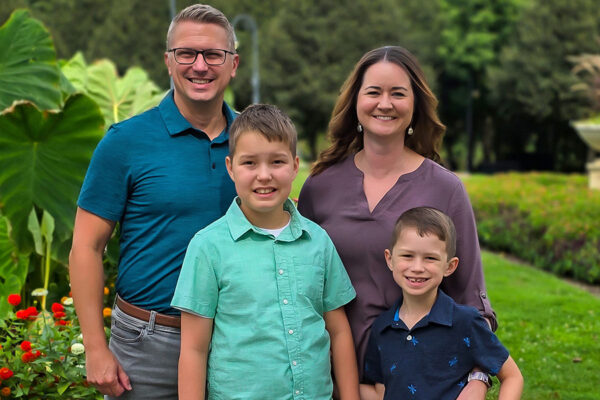

Jim Richardson
Thank you for serving as guardians Pam and Darren and thank you to all veterans that have served, especially to those who have given the ultimate sacrifice.