Finding his voice
One St. Paul family expands their faith formation through adaptive learning program.
Evan Beckman asks questions now. It’s a simple thing, but it means everything to his parents.
When the now sixth grader used to walk into St. Paul on Sunday mornings, he would sit quietly. His family attended worship, but the traditional Sunday morning learning room felt overwhelming. The noise. The pace. The unexpected transitions. Evan would shut down, and the opportunity to learn about faith alongside his peers seemed impossible.
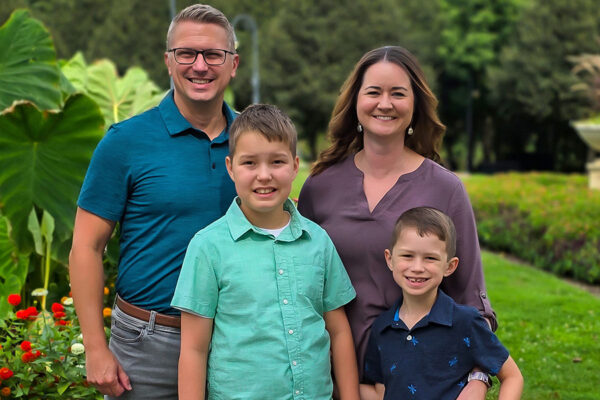 Today, Evan attends Sunday learning faithfully. He talks about the lessons at home. He remembers Bible stories. And yes, he asks questions about what he’s learned. The difference is the result of a carefully designed program and space created specifically for children like Evan, where sensory sensitivities are part of the planning, and learning is structured to help every child thrive.
Not one-size-fits-all
When Evan was younger, around kindergarten and first grade, Carolyn and Eric Beckman quickly learned that traditional Sunday faith formation wasn’t the right fit for their son.
“We eventually stopped attending the learning hour and just attended the services,” Carolyn recalls.
The family faced a choice familiar to many parents raising children with sensory sensitivities and learning differences: miss out on faith formation altogether, or find another way.
The challenge extended beyond Evan.
“When Evan’s younger brother Liam was old enough to start attending Sunday School, we still did not attend the learning hour because there wasn’t a good place for Evan to learn. Fortunately, within that year, a team at St. Paul began the process of creating a seperate, sensory friendly family-oriented classroom,” Carolyn said. “Evan, myself, and Eric have been attending Sunday learning for two years now, and Liam enjoys Sunday learning in the traditional classrooms.”
Creating space for inclusion
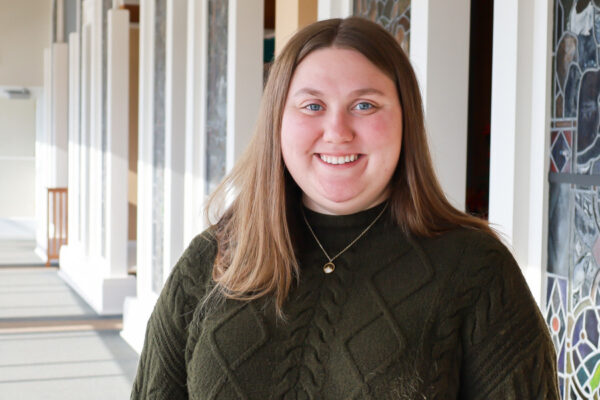
Ellie Lindmark, the director of youth ministries, explained the vision of the adaptive learning program.
“Sunday Learning is amazing. I love it. But it’s a lot to take in, it can feel overwhelming. There are a lot of people and a lot of high energy games,” Ellie said. “What can we do to provide that type of experience in a low stimulation environment?”
When the church received grant funding for accessibility and neurosupportive environments, staff and volunteers seized the opportunity. They didn’t just want to help one child. They wanted to build something sustainable, something that reflected the church’s commitment to radical hospitality.
The adaptive learning classroom was born and has slowly begun to take shape and evolve. It’s designed differently from traditional Sunday school. Low lighting reduces sensory overwhelm. Bean bags and cushions replace hard chairs. Fidgets and sensory tools sit within reach. Most importantly, the structure is consistent and predictable. Children always know what comes next.
“The primary things that have helped Evan participate in Sunday learning is a quieter space with a consistent structure to the lesson, and the opportunity to move around or stim (a repeated movement or sound to help manage emotions or sensory input) and utilize some of the fidgets and sensory tools in the classroom,” Carolyn explains. “Having lessons include short videos and picture stories, and a visual schedule to the lesson has really helped him learn as well.”
The teacher makes it happen
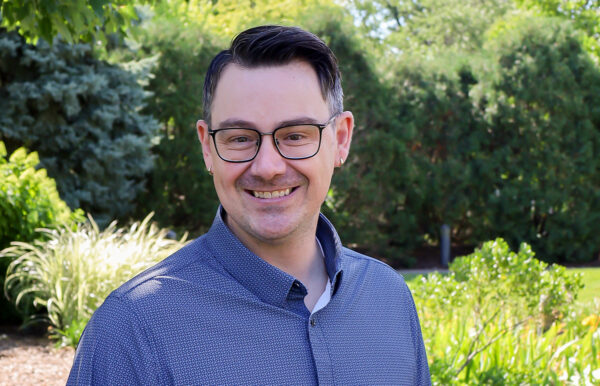
St. Paul member Rachael Suddarth leads the adaptive learning class, bringing together her unique background as a speech language pathologist and her years of teaching experience. But beyond her professional credentials, Rachael brings something deeper.
“Her professional background and personal experience truly shows,” Carolyn said. “She has such a great understanding of how to interact and support kids with sensory needs, and how much structure and flexibility plays a part in learning in her classroom.”
That flexibility matters more than many realize. Evan’s sensory needs fluctuate from week to week. Rachael adjusts seamlessly. She remains calm and patient, adapting the lesson if needed. There’s no punishment for movement or stimming. There’s no pressure to perform in a certain way. There’s learning, grounded in respect for how Evan’s brain works.
Each Sunday follows a rhythm: singing with the whole group, then transitioning into the quieter classroom. Rachael reads a Bible story, often multiple times and multiple ways. They pray together. They watch a video that brings the story to life.
“He really loves the video that goes along with the Bible reading and the lesson,” Carolyn said. “He often talks to us about it afterwards.”
Transformation
The changes in Evan crept up quietly. He began asking questions. He could remember the stories. His communication skills were expanding because he had space to do so.
“With delays in reading skills and communication skills, having the opportunity to visually learn at a slower, more structured pace has made such a big difference,” Carolyn reflects.
One of the biggest breakthroughs came when Evan participated in First Communion preparation. For many families, this milestone feels out of reach for children with learning differences. Rachael worked alongside the Beckmans to adapt the traditional classes.
“We feel very blessed that he has this opportunity,” Carolyn said. “Rachael worked with us to adapt the traditional classes to better suit Evan’s learning style.”
Perhaps most importantly, the adaptive learning program allowed the Beckman family to simply be together.
“Having a space for both of our boys to learn, and enjoy to learn, was the only way for our entire family to be able to participate in the learning hour,” Carolyn said. “We love that we can do this now.”
A bigger vision
“Parents of children with special needs and sensory sensitivities know that every day can be different. Even with the prepping, the planning, and all of the supports in place, some days are just tough. Some days church won’t be an option, we ourselves have had many of those days. We have found St. Paul and its community so supportive, and has helped our family find a safe and comforting place for our child.”
But there’s also urgent advocacy in her words.
“Truthfully, more than likely our family wouldn’t have participated in Sunday learning. The opportunity to learn, pray, and sing with peers would have been lost.”
Faith formation isn’t just about the individual child. It’s about building a congregation that knows how to welcome every kind of learner. It’s about young people feeling that they belong, that they matter, that their way of experiencing the world is not a barrier to faith but part of how God made them.
Adaptive Learning
A specialized Sunday school class designed specifically for individuals with sensory sensitivities and their families. Led by St. Ambrose professor Rachael Suddarth, this inclusive learning environment features a modified schedule and thoughtfully adapted space where learners of all abilities can comfortably explore their faith formation together.
Held every Sunday, this multigenerational class welcomes anyone who’d like to join, learning side-by-side and creating meaningful opportunities for parents and caregivers to actively participate in their children’s spiritual growth while building community with other families who understand the unique needs of sensory-sensitive learners. Contact: Ellie Lindmark, ellie@stpaulqc.org.